Master the Reconciliation Loop. Watch how a Declarative System self-heals, scales (HPA), and performs Rolling Updates.
Orchestration Simulator
Visualize the Reconciliation Loop. Managing infrastructure as Code.
Target Replicas
3
Healthy Pods
0
Version
v1
Configuration
User Load (HPA)10 RPS
Cluster Events
LOAD BALANCER
Node-01
No Pods Scheduled
Node-02
No Pods Scheduled
Node-03
No Pods Scheduled
Quick Guide: Kubernetes Orchestration
Understanding the basics in 30 seconds
How It Works
Define desired state in YAML manifests
Controller watches current vs desired state
Reconciliation loop fixes any drift
HPA monitors metrics, scales pods
Rolling updates: gradual pod replacement
Key Benefits
Self-healing: Auto-restart failed pods
Horizontal scaling based on load
Zero-downtime deployments
Service discovery & load balancing
Infrastructure as Code (GitOps)
Real-World Uses
Google, Netflix: Microservices at scale
CI/CD pipelines: Automated deployment
Multi-cloud: Portable workloads
Dev environments: Local K8s (minikube)
Edge computing: K3s on IoT devices
Kubernetes Visualized: The Self-Healing Cluster
Understand how Declarative Infrastructure, Reconciliation Loops, and Rolling Updates keep modern applications running 24/7.
Self-Healing Logic
Kubernetes works on a Reconciliation Loop. You tell it the "Desired State" (e.g., "I want 3 replicas of v1"). The controller continuously checks the "Current State".
If a Pod crashes (Current < Desired), it creates a new one.
If a Node dies, it moves pods to healthy nodes.
You don't start servers manually; you just declare the goal.
Rolling Updates
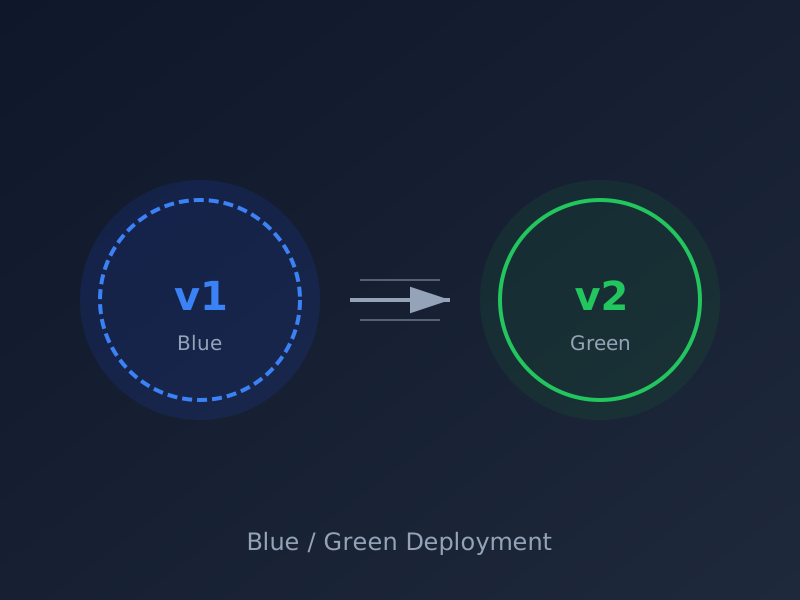
Deploying new code shouldn't mean downtime. A Rolling Update replaces pods one by one.
Load Balancer (Service) only sends traffic to READY pods.
v2 pods start up and pass health checks.
Only then are v1 pods terminated.
Why "Microservices"?
In a monolith, if one process crashes, the whole server goes down. In the architecture simulated above, even if Node-01 burns down, the Orchestrator (K8s) simply reschedules the workload to Node-02 and Node-03. This fault tolerance is the backbone of modern cloud computing.
The Kubernetes Control Loop
Declarative vs Imperative
Kubernetes uses a declarative model. You define the desired state (e.g., "I want 3 replicas"), and Kubernetes figures out how to achieve it. You don't say "create pod 1, create pod 2..." — that's imperative.
Reconciliation Loop
Observe: Watch current state of cluster
Diff: Compare desired vs actual state
Act: Take corrective action if needed
Repeat: Continuously (~every 10s)
Horizontal Pod Autoscaler (HPA)
HPA automatically scales the number of pods based on observed CPU/memory utilization or custom metrics.
📈 Scale Up
CPU > 80% target → Add more pods. Traffic spike handled automatically.
📉 Scale Down
CPU < 50% for 5 minutes → Remove pods. Save resources during low traffic.
Self-Healing Mechanism
Kubernetes monitors pod health using Liveness and Readiness probes. Failed pods are automatically restarted or replaced.
Liveness Probe: Is the container alive? If not → restart
Readiness Probe: Is it ready for traffic? If not → remove from service
Startup Probe: Is it still starting? Protect slow-starting apps
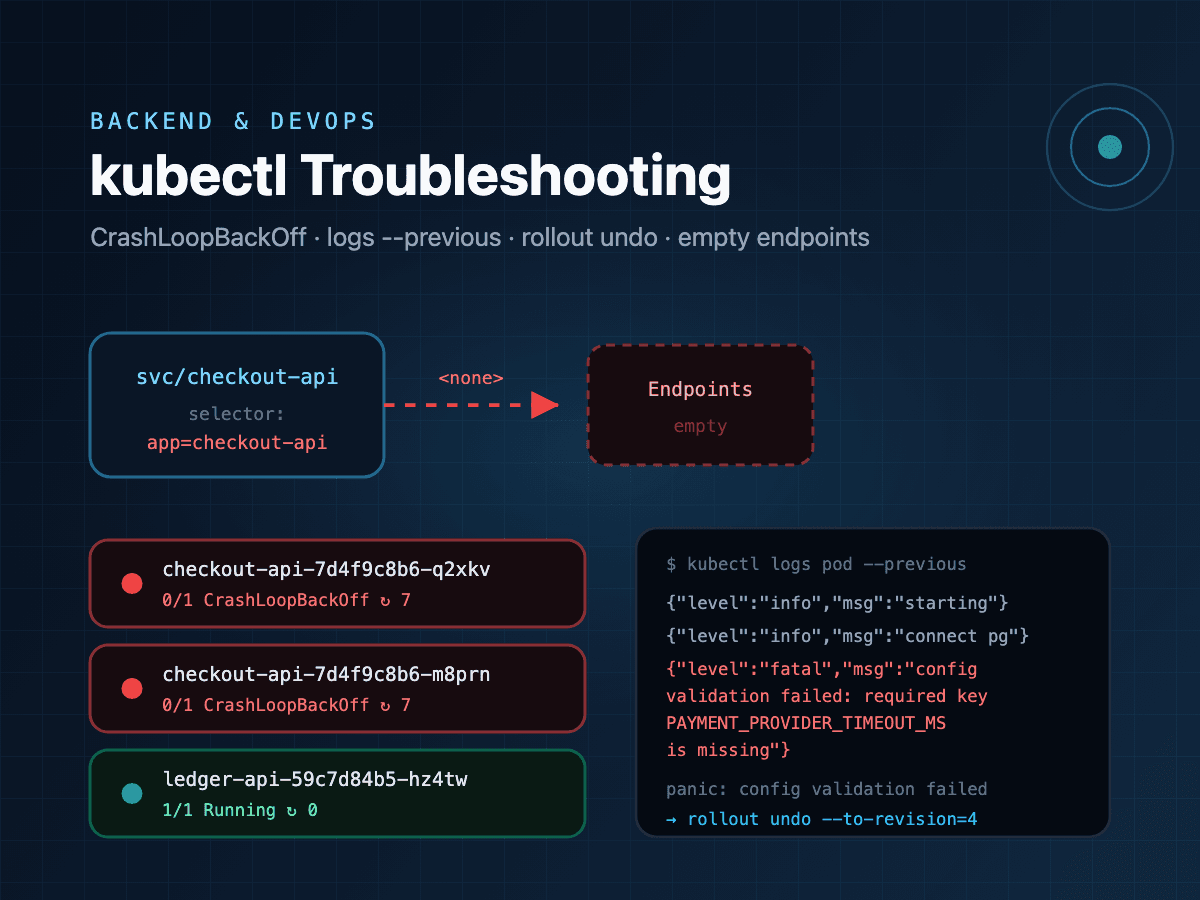
💡 Pro Tip: Use kubectl get events --sort-by='.lastTimestamp' to debug why pods are restarting