Explore the power of Decentralization. Visualize how Seeds and Leechers form a Swarm to distribute data efficiently without a central server.
P2P Swarm Simulator
Visualize BitTorrent protocol. How distributed swarms share files piece-by-piece.
Protocol Settings
Strategy
Tracker (DHT)ONLINE
Seeders
0
Leechers
0
TRACKER
Quick Guide: Peer-to-Peer Networks
Understanding the basics in 30 seconds
How It Works
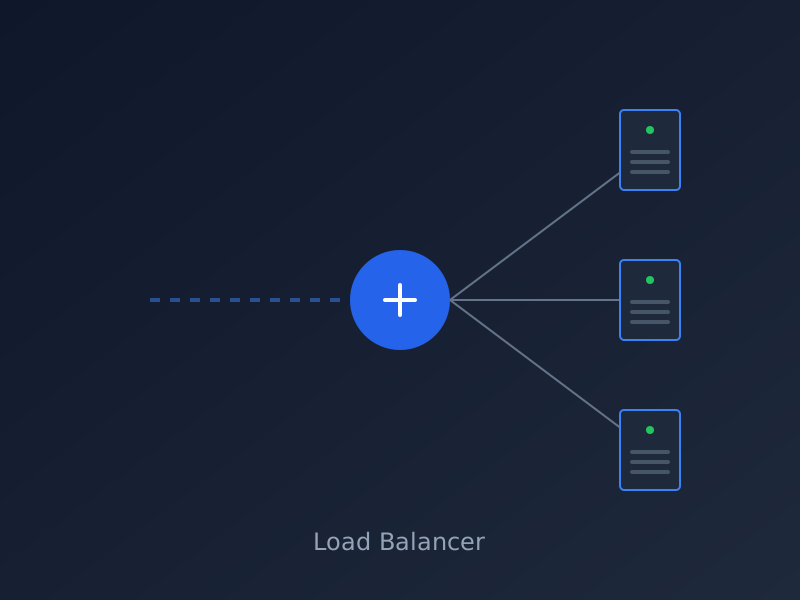
Tracker connects peers in the swarm
File split into small pieces (chunks)
Leechers download pieces from multiple seeds
Rarest-first: Prioritize rare pieces
Complete download → Become a seed
Key Benefits
No single point of failure
Scales with more users (more = faster)
Bandwidth shared across all peers
Resilient to network issues
No central server costs
Real-World Uses
BitTorrent: File sharing
Blockchain: Decentralized consensus
WebRTC: Video calls
IPFS: Distributed web
Game updates: Blizzard, Steam
Inside the Swarm: Understanding BitTorrent Protocol
Why downloading from 100 people is faster than downloading from one server.
Rarest First Strategy
To keep the swarm healthy, peers don't just grab random pieces. They look for the rarest piece available in the swarm and download that first.
This ensures that if the original Seed goes offline, all pieces of the file likely exist distributed among the Leechers.
Tit-for-Tat (Choking)
BitTorrent isn't charity. If you don't upload to others, they will Choke you (stop sending data).
Simulate this above by clicking a peer to "Choke" them. Watch how their connections drop over time (in a real swarm).
Core Terminology
Seed
A peer that has 100% of the file and is only uploading.
Leecher
A peer that is still downloading parts of the file.
Tracker
A server that introduces peers to each other (doesn't handle file data).
Beyond BitTorrent: Modern P2P Technologies
DHT: Distributed Hash Tables
Modern P2P networks don't rely on centralized trackers. DHT allows peers to find each other without any central server using a distributed key-value store.
How DHT Works
Each peer maintains a routing table of other peers
Content is identified by a hash (infohash)
Queries hop through the network until content is found
Kademlia: Most popular DHT implementation
Magnet Links
Instead of downloading .torrent files, Magnet Links contain just the infohash. The metadata is fetched from peers in the swarm.